
What Causes Pressure Sores? Key Risks to Know
A red area on the heel, tailbone, hip, or elbow can become a serious wound faster than many families expect. Understanding what causes pressure sores helps caregivers, home-health buyers, and clinical teams act before skin damage progresses. These injuries are often preventable, but prevention requires more than simply adding a cushion or changing sheets.
Pressure sores are also called pressure injuries, bedsores, or decubitus ulcers. They develop when skin and the tissue beneath it do not receive enough blood flow for too long. A person who cannot move easily may not feel the warning discomfort that normally prompts someone to shift position. That is why regular observation, skin care, mobility support, and the right caregiving supplies matter.
What Causes Pressure Sores?
The primary cause is prolonged pressure on one part of the body. When body weight presses skin and soft tissue against a bed, chair, wheelchair, brace, or other firm surface, it can compress tiny blood vessels. Without adequate circulation, the area receives less oxygen and nourishment. Cells begin to break down, and a wound may form.
Bony areas have the highest risk because there is less natural padding between bone and the surface underneath. Common locations include the tailbone, buttocks, hips, heels, ankles, knees, shoulder blades, elbows, and the back of the head. The exact risk area depends on whether a person spends most of their time lying down, sitting upright, or using a mobility device.
Pressure is rarely the only issue. Friction, shear, moisture, poor nutrition, and medical conditions can all make skin more vulnerable. In practical terms, a pressure sore often develops from several risks occurring together rather than one single mistake.
Pressure from limited movement
People who stay in one position for long periods face the greatest risk. This includes individuals recovering from surgery, living with paralysis, managing severe illness, using a wheelchair, or spending extended time in bed. Older adults can also be at higher risk when weakness, arthritis, pain, dizziness, or cognitive changes make repositioning difficult.
A person may be able to move slightly but still not enough to relieve pressure from the same areas. For example, sitting in a chair all day without shifting weight can place continuous stress on the tailbone and hips. A pillow may improve comfort, but it does not replace regular repositioning or an appropriate pressure-relief surface.
Shear and friction during transfers
Shear happens when the skin stays in place while deeper tissues move in another direction. It often occurs when someone slides down in bed after the head is raised, or when they are pulled across a sheet rather than carefully lifted during a transfer. The skin may look intact at first, but tissue below the surface can be damaged.
Friction is rubbing that can wear away the top layer of skin. It may occur when heels rub against bedding, when a foot drags during mobility, or when clothing and linens bunch under the body. Proper transfer techniques, smooth bedding, protective positioning, and correctly fitted mobility aids can reduce these forces.
Moisture weakens the skin barrier
Sweat, wound drainage, and urinary or bowel incontinence can soften the skin and make it easier to tear. Moisture is especially concerning around the buttocks, groin, and skin folds. Incontinence-related irritation is not always a pressure injury, but it can occur alongside one and make healing more difficult.
Prompt cleansing, gentle drying, regular brief or pad changes, and barrier products can help protect skin. The goal is not to scrub aggressively. Fragile skin benefits from gentle handling and a consistent care routine.
Poor nutrition and dehydration
Skin needs protein, calories, fluids, vitamins, and minerals to stay healthy and repair minor damage. People with poor appetite, swallowing problems, digestive conditions, unplanned weight loss, or dehydration may have less ability to tolerate pressure and recover from injury.
Low body weight can increase risk because there is less cushioning over bones. However, higher body weight can also create risk by making repositioning harder and increasing moisture in skin folds. The right approach depends on the person’s mobility, skin condition, medical needs, and available support.
Reduced sensation or circulation
Some people do not feel pain, pressure, or numbness in affected areas. Diabetes, nerve damage, spinal cord injuries, stroke, and certain neurological conditions can reduce sensation. Without that signal to move, pressure can continue unnoticed.
Poor circulation can also slow healing. Peripheral artery disease, diabetes, smoking, low blood pressure, and some heart or vascular conditions may reduce blood flow to the skin. Anyone with these concerns should seek individualized guidance from a qualified healthcare professional, especially if they notice a wound, discoloration, swelling, or persistent pain.
Who Is Most at Risk?
Pressure sores can affect people of any age, but they are most common among those with restricted mobility or serious health needs. Hospital patients, long-term care residents, wheelchair users, people receiving home care, and those recovering from injury or surgery all need regular skin checks.
Risk rises when limited movement is combined with incontinence, fever, dehydration, poor nutrition, reduced alertness, or a history of pressure injuries. Medical devices can create localized pressure too. Oxygen tubing, masks, casts, splints, catheters, compression garments, and poorly fitted braces should be checked regularly for rubbing, redness, or indentations.
For families, the practical question is not whether someone is completely bedbound. Ask whether they can comfortably change position on their own, notice pressure or dampness, and keep their skin clean and dry. If the answer is no, a prevention plan is needed.
Early Signs You Should Not Ignore
Early action can stop a small problem from becoming a deeper wound. On lighter skin, an early pressure injury may appear as a red area that does not turn white when pressed. On darker skin, it may look purple, blue, gray, darker than surrounding skin, or unusually shiny. It may also feel warmer, firmer, softer, itchy, or painful.
Do not massage a red or discolored pressure area. Massage can worsen tissue damage beneath the skin. Instead, relieve pressure immediately, keep the area clean and dry, and monitor it closely. If the skin is broken, blistered, draining, blackened, or increasingly painful, contact a healthcare professional promptly.
Urgent medical assessment is particularly important for fever, spreading redness, foul odor, pus, confusion, or a wound that appears deep. Pressure injuries can become infected and may require clinical wound care.
Practical Prevention for Home and Clinical Care
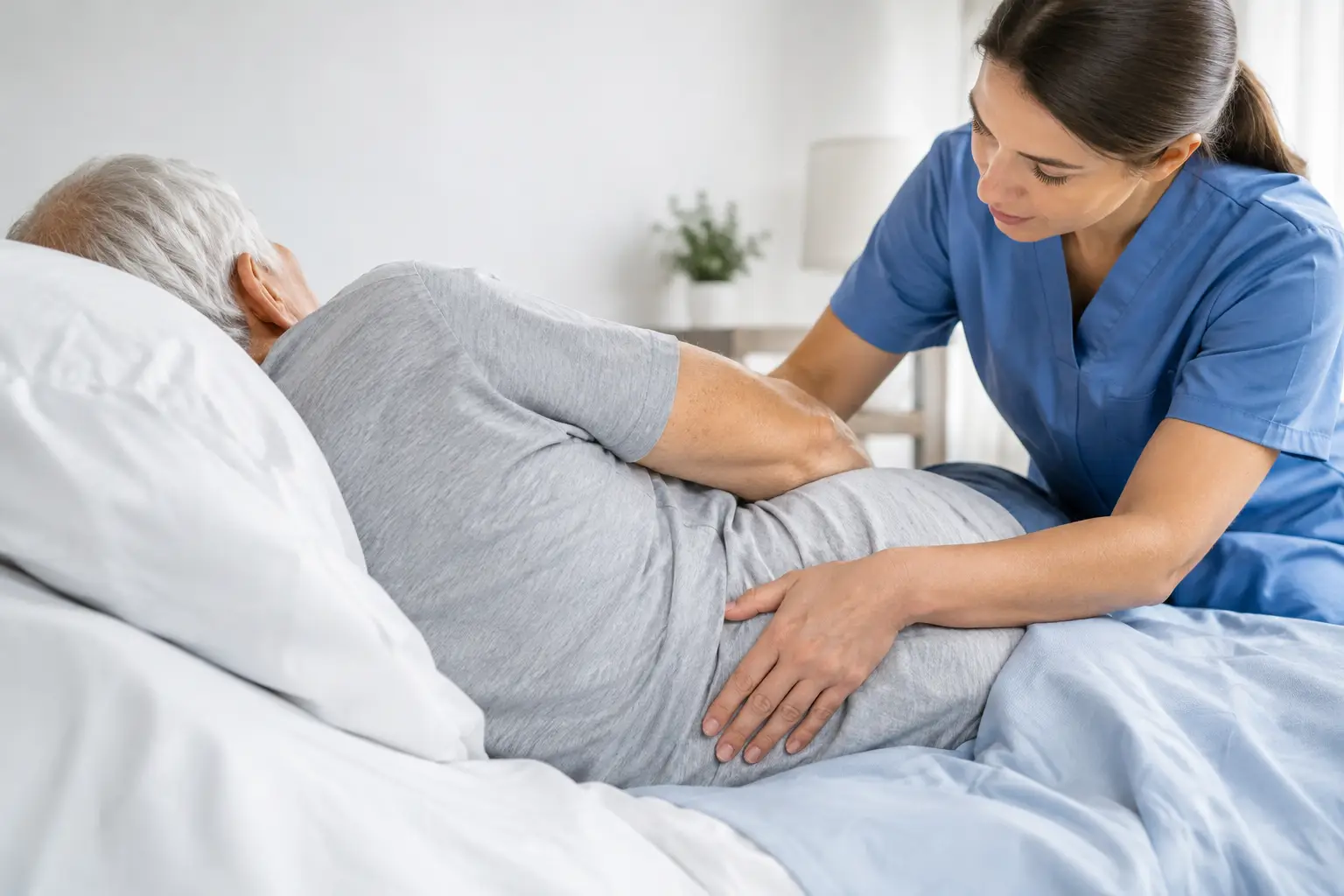
Effective prevention is a routine, not a one-time purchase. Start with regular repositioning based on the person’s condition and care plan. A caregiver may need to assist with turning in bed, shifting weight in a chair, and checking that heels are not resting continuously against a mattress or footrest.
Use clean, dry linens with minimal wrinkles. Choose supportive cushions, pressure-relieving mattresses, heel protectors, positioning pillows, and mobility aids according to the person’s needs. A standard cushion may be suitable for short-term comfort, while a person at high risk may require a more specialized surface selected with clinical advice.
Daily skin checks are essential. Look carefully at the heels, ankles, hips, tailbone, elbows, shoulder blades, and any place where a device touches the skin. Keep skin clean, manage moisture quickly, and use gentle personal-care products that do not leave skin overly dry or irritated.
Nutrition deserves equal attention. Encourage appropriate fluids and balanced meals when medically allowed, and raise concerns about poor appetite or weight loss with a clinician. For professional buyers and caregivers sourcing supplies, having reliable access to incontinence care, disposable underpads, wound-care essentials, mobility supports, and pressure-relief products can make consistent care easier to maintain.
Tradevin FZ supports practical purchasing across everyday caregiving and clinical supply categories, helping households and care teams organize the essentials they use most often.
A Small Skin Change Is Worth Acting On
Pressure sores can begin quietly, sometimes as a patch of discoloration that seems minor at first glance. Checking vulnerable skin, relieving pressure early, and responding quickly to moisture or discomfort gives caregivers the best chance to protect comfort, mobility, and healing.