
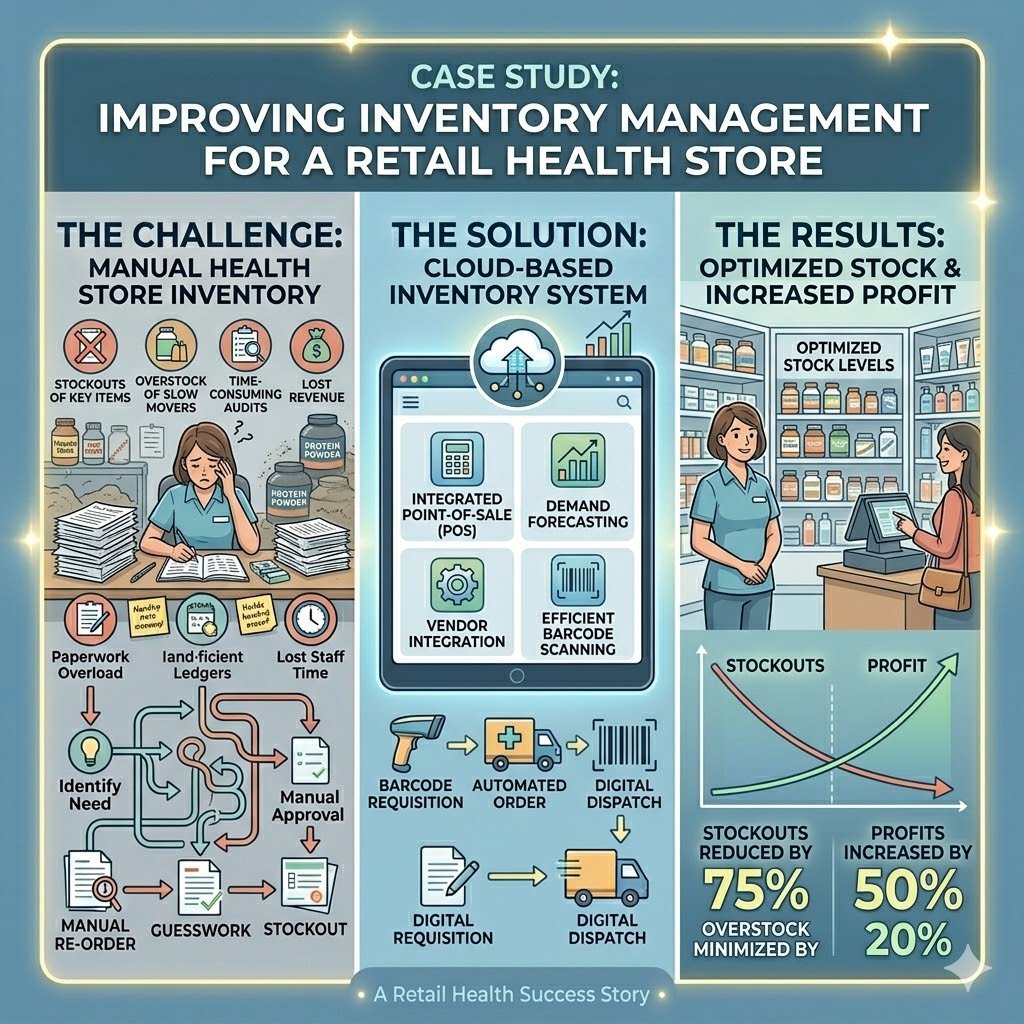
Case Study: Improving Inventory Management for a Retail Health Store
How smarter bulk ordering and structured sourcing reduced stockouts and overstocking.
Introduction
For retail health stores, inventory is everything.
Having too much stock ties up capital and storage space, while too little leads to:
- Missed sales opportunities
- Customer dissatisfaction
- Frequent emergency orders
- Operational stress
For one growing retail health store, balancing inventory had become a major challenge.
Through better procurement planning and structured bulk ordering, the business was able to bring stability to its inventory system and improve overall efficiency.
The Challenge: Overstocking and Stockouts
The store struggled with inconsistent inventory levels due to unstructured purchasing habits.
Key challenges included:
- Ordering products based on guesswork rather than data
- Overstocking slow-moving items
- Running out of high-demand products
- Frequent last-minute reordering
These issues led to:
- Wasted storage space
- Increased holding costs
- Lost sales opportunities
- Inefficient procurement cycles
The business needed a more balanced and predictable inventory strategy.
The Solution: Smarter Bulk Ordering and Structured Procurement
To resolve these challenges, the store implemented a more strategic approach to purchasing.
1. Aligning Orders With Product Demand
The business began identifying high-demand and slow-moving products.
This helped:
- Prioritize bulk orders for fast-moving items
- Reduce unnecessary stock of low-demand products
- Improve inventory turnover
2. Standardizing Reorder Quantities
Instead of inconsistent order sizes, the store implemented consistent bulk order quantities based on usage patterns.
This created:
- More predictable inventory levels
- Reduced stock fluctuations
- Better storage management
👉 Optimize your bulk purchasing with Tradevin:
🔗 https://tradevinfz.com
3. Reducing Emergency Orders
With better planning and consistent procurement cycles, the business minimized last-minute purchases.
This resulted in:
- Lower procurement costs
- Reduced operational stress
- Improved supply reliability
The Results: Balanced Inventory and Improved Efficiency
After implementing these strategies, the store saw measurable improvements:
Fewer Stockouts
High-demand products were consistently available for customers.
Reduced Overstocking
Better planning minimized excess inventory and storage issues.
Improved Cash Flow
Less money was tied up in unnecessary stock.
More Predictable Procurement
Structured ordering created stability in purchasing and inventory management.
Key Takeaways for B2B Buyers
This case study highlights key inventory management lessons:
✔ Align procurement with product demand
✔ Standardize order quantities for consistency
✔ Reduce reliance on emergency orders
✔ Use bulk purchasing strategically
Effective inventory management is a direct result of smarter procurement practices.
How Tradevin Supports Better Inventory Management
Tradevin helps businesses improve inventory control by providing:
✔ Structured product categories
✔ Consistent bulk ordering options
✔ Simplified repeat purchasing
✔ Better procurement visibility
✔ More predictable sourcing workflows
With the right sourcing platform, businesses can transform inventory challenges into operational strengths.
Ready to take control of your inventory and improve procurement efficiency?
👉 Explore Tradevin’s B2B marketplace today:
🔗 https://tradevinfz.com
👉 Start optimizing your inventory strategy:
🔗 https://tradevinfz.com
Up Next in This Series
Blog 4:
Case Study: How a Laboratory Supplier Reduced Order Inconsistencies