
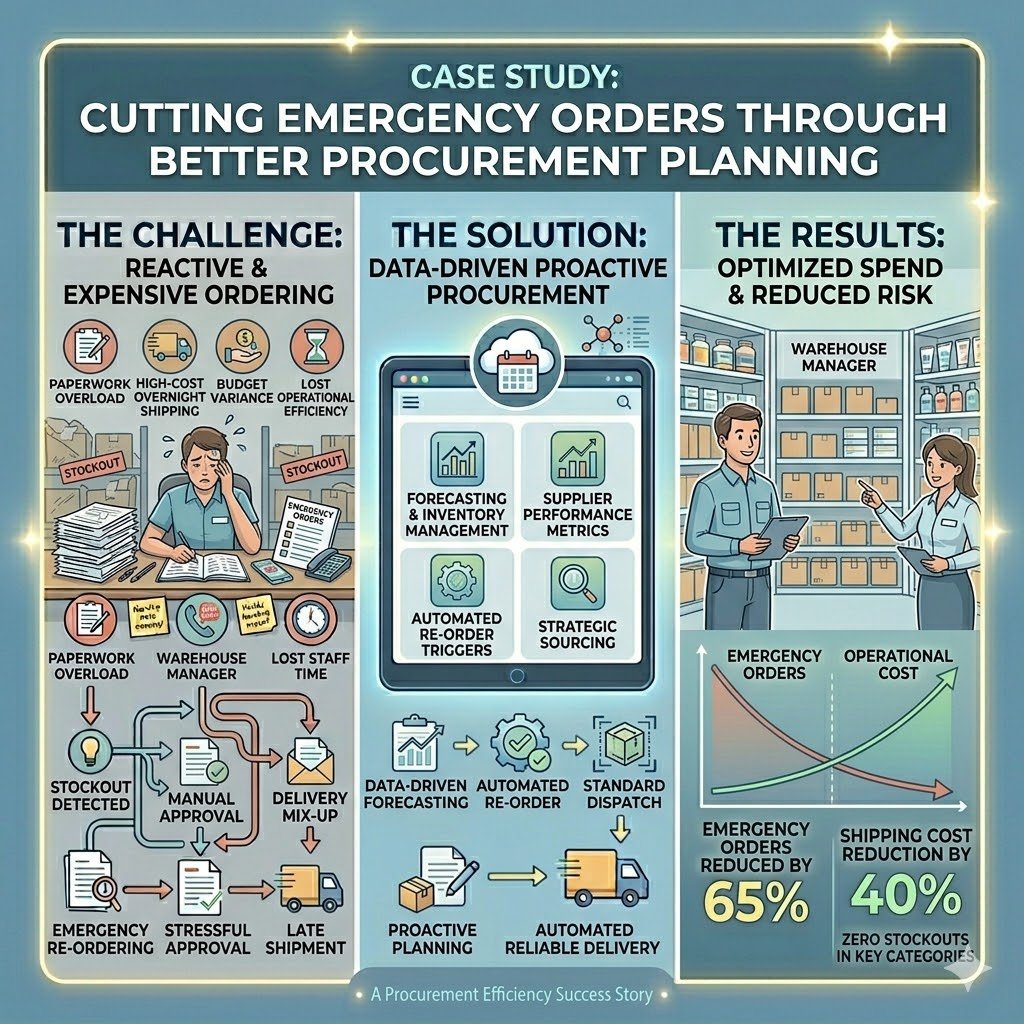
Case Study: Cutting Emergency Orders Through Better Procurement Planning
How forecasting and structured bulk ordering reduced last-minute purchasing and operational stress.
Introduction
Emergency procurement is one of the biggest hidden costs in B2B operations.
Last-minute orders often lead to:
- Higher shipping costs
- Limited product availability
- Increased pressure on procurement teams
- Disruptions in daily operations
For one growing business, frequent emergency orders had become the norm—creating inefficiencies and unnecessary expenses.
By shifting to a more proactive procurement strategy, the company was able to significantly reduce urgent purchasing and improve overall stability.
The Challenge: Constant Last-Minute Orders
The business struggled with reactive procurement habits.
Key issues included:
- Ordering only when stock ran low
- Lack of inventory forecasting
- No standardized ordering schedule
- Dependence on rush deliveries
These challenges resulted in:
- Higher procurement costs
- Increased operational stress
- Frequent stockouts
- Inefficient workflow management
The business needed a more predictable and controlled approach to purchasing.
The Solution: Proactive Planning and Bulk Ordering
To address these challenges, the company implemented a forward-thinking procurement strategy.
1. Forecasting Inventory Needs
The business began analyzing product usage patterns to anticipate future demand.
This helped:
- Identify high-demand items
- Plan purchases in advance
- Reduce reliance on reactive ordering
2. Implementing Scheduled Bulk Orders
Instead of placing frequent small orders, the company transitioned to scheduled bulk purchasing.
Benefits included:
- Lower shipping costs
- More consistent inventory levels
- Improved procurement efficiency
👉 Plan smarter bulk orders with Tradevin:
🔗 https://tradevinfz.com
3. Creating a Structured Procurement Workflow
The team established clear procurement processes, including:
- Defined reorder points
- Standardized order quantities
- Regular review of inventory levels
This reduced uncertainty and improved overall control.
The Results: Fewer Emergencies and Greater Stability
After implementing these changes, the business experienced:
Significant Reduction in Emergency Orders
Procurement became more predictable and proactive.
Lower Costs
Bulk ordering and better planning reduced expensive last-minute purchases.
Improved Inventory Availability
Stock levels became more consistent, reducing shortages.
Reduced Operational Stress
Procurement teams could work more efficiently without constant urgency.
Key Takeaways for B2B Buyers
This case study highlights important lessons:
✔ Forecasting reduces reactive purchasing
✔ Bulk ordering improves cost efficiency
✔ Scheduled procurement increases stability
✔ Structured workflows reduce operational stress
Proactive procurement is the key to long-term efficiency.
How Tradevin Supports Smarter Procurement Planning
Tradevin helps businesses improve procurement planning by providing:
✔ Structured sourcing environments
✔ Simplified bulk ordering
✔ Organized product categories
✔ Consistent purchasing workflows
✔ Improved procurement visibility
With the right tools, businesses can shift from reactive to strategic sourcing.
Ready to eliminate emergency orders and take control of your procurement process?
👉 Explore Tradevin’s B2B marketplace today:
🔗 https://tradevinfz.com
👉 Start planning smarter, more efficient purchases:
🔗 https://tradevinfz.com
Up Next in This Series
Blog 6:
Case Study: Simplifying Supplier Management for a Multi-Location Business