
Guide to Ostomy Care Supplies for Daily Comfort
A secure pouching system can make the difference between planning your day around an ostomy and getting on with work, family time, errands, and travel. This guide to ostomy care supplies helps patients, family caregivers, and clinical buyers identify the products that support comfort, skin protection, hygiene, and reliable daily changes.
Ostomy needs are personal. The right supplies depend on the type of ostomy, stoma size and shape, output consistency, skin sensitivity, manual dexterity, and lifestyle. A product that works well for one person may not be the best fit for another, so use this as a practical shopping guide and follow the recommendations of your ostomy nurse or healthcare provider.
Start With the Core Ostomy Pouching System
Every ostomy system has two main jobs: collect output securely and protect the skin around the stoma. The pouching system is the central supply to replace on a regular schedule.
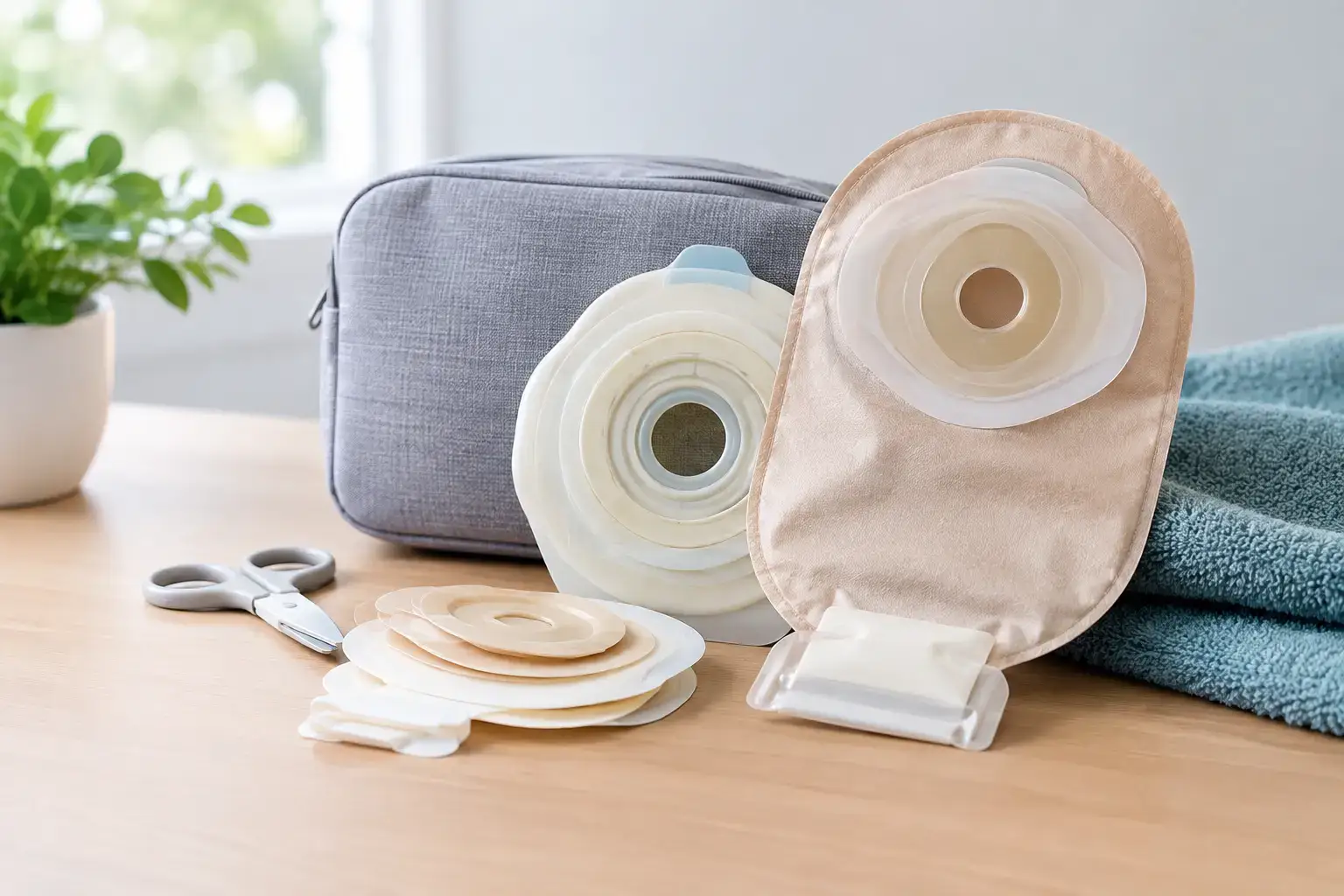
A one-piece system combines the pouch and skin barrier in one unit. It is usually low-profile and straightforward to apply, which can be useful for people who prefer fewer components. The trade-off is that the adhesive barrier is removed every time the pouch is changed.
A two-piece system has a separate skin barrier, also called a wafer or flange, and a pouch that attaches to it. This option can make pouch changes easier without removing the barrier as often. It may suit people who need to empty or change a pouch frequently, although the coupling can add a little bulk.
Pouches are available in closed-end and drainable styles. Closed-end pouches are generally intended for more formed stool and are discarded after use. Drainable pouches have an opening at the bottom and are commonly used for ileostomies or colostomies with more frequent output. For urostomies, choose a pouch designed with a drainage valve and connect it to a night drainage system when recommended.
Transparent pouches can be helpful immediately after surgery or when monitoring the stoma. Opaque pouches offer more privacy for daily wear. Many people keep both available.
Choose the Right Skin Barrier Fit
A well-fitted skin barrier is one of the most valuable parts of an ostomy routine. It should sit close to the stoma without rubbing it or leaving exposed peristomal skin. Output that reaches the skin can cause burning, itching, breakdown, and leaks.
Measure the stoma regularly, especially during the first weeks and months after surgery, when its size may change. Pre-cut barriers offer speed and convenience once the stoma is stable. Cut-to-fit barriers allow a more customized opening and can be a better choice when the stoma is irregularly shaped or still changing.
Flat barriers work well for many users. Convex barriers are designed to apply gentle pressure around the stoma and may improve the seal when the stoma is flush, recessed, or located near folds and scars. Convexity is not a one-size-fits-all solution. It should be selected with clinical guidance, particularly if there is pain, skin damage, or a new leak pattern.
Barrier wear time varies. Some people change their system every one to three days, while others can wear it longer. Replace the barrier promptly if it leaks, lifts at the edges, causes itching or burning, or if output has seeped underneath. Extending wear time to save supplies can lead to skin injury and may create more costly problems later.
Essential Accessories for a Better Seal
Not everyone needs every accessory. The best approach is to start with the core system, then add items that solve a specific issue such as uneven skin, moisture, odor, or difficulty removing adhesive.
Barrier rings or seals help fill small gaps around the stoma and can improve protection against leaks. They are especially useful for uneven skin contours, creases, scars, or a stoma that sits close to skin level. Paste can serve a similar gap-filling role, but it is not glue and should not be used to force a poorly fitting barrier to stay in place.
Skin barrier wipes or sprays create a protective film on clean, dry skin. They can help reduce irritation from adhesives and repeated pouch changes. If the skin is weepy or irritated, ostomy powder may be used as directed by a clinician, often with a protective barrier film over it. Avoid using lotions, oils, or heavily fragranced products under the adhesive because they can weaken the seal.
Adhesive remover wipes or sprays make pouch removal gentler and may reduce skin stripping. Elastic barrier strips or tape can provide extra edge support during active days, humid weather, swimming, or travel. They are helpful for some users, but they do not replace a properly fitted skin barrier.
Odor-control drops, lubricating deodorant, and pouch liners can improve comfort and confidence. Lubricating products help output move down into the pouch instead of collecting around the stoma. For urostomy care, consider deodorizing products intended for urine pouches and confirm that they are compatible with the system being used.
Build a Practical Daily Supply Kit
Keeping supplies organized prevents rushed changes and makes it easier for caregivers or clinical teams to track what is running low. Store unopened products in a clean, dry place away from excessive heat, direct sun, and moisture.
A dependable home kit should include pouches, skin barriers, barrier rings or seals if used, cleaning materials, a measuring guide, disposal bags, and any prescribed accessories. Add scissors if using cut-to-fit barriers, but keep them reserved for ostomy supplies to maintain cleanliness. A small mirror can be useful for users who need to check the fit from different angles.
For a travel kit, pack at least twice the supplies expected for the trip. Delays, lost luggage, unexpected leaks, and changes in climate can all increase usage. Keep a portion of supplies in a carry-on bag, along with disposal bags, wipes, a change of clothing, and a written list of product names and sizes. If flying, do not place all essential supplies in checked luggage.
For clinics, care homes, and professional caregivers, standardizing a stock area can reduce missed items during routine changes. Separate supplies by resident or patient where needed, label sizes clearly, and check expiration dates and stock levels before they become urgent.
Cleaning and Changing: Keep the Routine Simple
Most stomas can be cleaned with warm water and soft wipes or cloths. Soap is optional, but if used, choose a mild product without oils, moisturizers, or residue that may interfere with adhesion. Pat the skin fully dry before applying a new barrier.
Empty a drainable pouch when it is about one-third to one-half full. Waiting until it is heavy can pull on the barrier and increase the risk of a leak. Many people find it easiest to establish a predictable routine around meals, bedtime, and leaving home.
Before applying a new barrier, inspect the skin. Healthy peristomal skin should look similar to the surrounding abdomen. Mild redness directly after removal may fade quickly, but persistent redness, open areas, bleeding skin, pain, repeated leaking, or a rash that does not improve should be assessed by an ostomy nurse or healthcare professional.
Match Supplies to Ostomy Type and Lifestyle
Colostomy, ileostomy, and urostomy care have overlapping needs, but output differences matter. Ileostomy output is often more liquid and may require careful attention to drainable pouches, skin protection, hydration, and early leak control. Colostomy routines may vary more widely depending on output consistency and location of the stoma. Urostomy users need a pouch with a reliable tap or valve and may need nighttime drainage accessories.
Lifestyle also shapes purchasing decisions. An active person may prioritize flexible barriers, edge support, and compact travel supplies. Someone with arthritis or reduced hand strength may benefit from easier closures, larger tabs, or a two-piece system. Parents and caregivers may value simplified routines and clearly labeled backup supplies. Price matters too, but the lowest-cost option is not always the best value if it causes frequent changes, leakage, or skin irritation.
Tradevin FZ supports convenient product discovery across caregiving, hygiene, disposable clinical supplies, and everyday health needs, making it easier to organize recurring purchases alongside household essentials.
When to Ask for Professional Help
Contact a healthcare professional or ostomy nurse for a new stoma that changes color, severe or ongoing pain, uncontrolled leakage, deep skin breakdown, unusual bleeding, signs of infection, or major changes in output. Seek urgent care for symptoms such as severe abdominal pain, persistent vomiting, no output with cramping or swelling, or signs of dehydration.
Finding the right ostomy care supplies often takes a few adjustments. Keep notes on wear time, leaks, skin response, and the products used. That simple record gives you and your care team a clearer path to a routine that feels secure enough to support everyday life.