
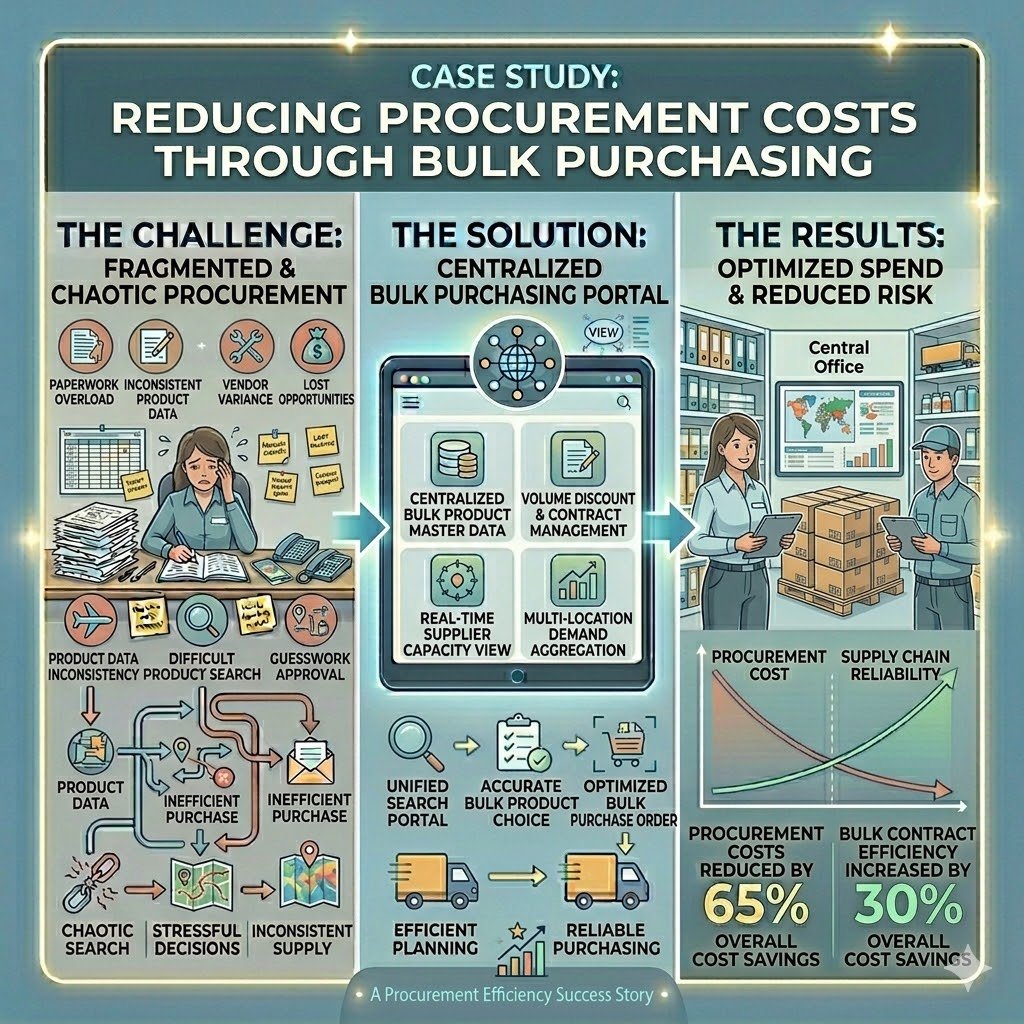
Case Study: Reducing Procurement Costs Through Bulk Purchasing
How strategic bulk ordering helped a business lower costs and improve purchasing efficiency.
Introduction
In B2B procurement, small savings per order can lead to significant long-term gains.
However, businesses that rely on frequent small purchases often face:
- Higher per-unit costs
- Increased shipping expenses
- Inefficient procurement cycles
- Missed opportunities for cost optimization
For one growing business, procurement costs were steadily increasing due to inconsistent ordering practices.
By adopting a more strategic bulk purchasing approach, the company was able to significantly reduce costs while improving overall efficiency.
The Challenge: High Procurement Costs
The business struggled with cost inefficiencies caused by unstructured purchasing.
Key challenges included:
- Frequent small orders instead of bulk purchases
- Higher shipping costs due to multiple deliveries
- Lack of pricing optimization
- Inconsistent procurement planning
These issues resulted in:
- Increased operational expenses
- Reduced profit margins
- Inefficient use of resources
The company needed a more cost-effective procurement strategy.
The Solution: Strategic Bulk Purchasing
To address these challenges, the business implemented a more structured and cost-focused approach to procurement.
1. Consolidating Orders Into Bulk Purchases
Instead of placing multiple small orders, the company grouped purchases into larger bulk orders.
This helped:
- Reduce per-unit costs
- Lower shipping expenses
- Improve purchasing efficiency
👉 Maximize cost efficiency with Tradevin:
🔗 https://tradevinfz.com
2. Planning Procurement in Advance
The business shifted from reactive purchasing to proactive planning.
This allowed them to:
- Take advantage of better pricing opportunities
- Avoid last-minute purchases
- Optimize order timing
3. Standardizing Frequently Purchased Items
By creating consistent product lists, the company avoided unnecessary variations and improved cost predictability.
This resulted in:
- More accurate budgeting
- Reduced procurement complexity
- Improved supplier consistency
The Results: Lower Costs and Improved Efficiency
After implementing these strategies, the business experienced:
Reduced Procurement Costs
Bulk ordering lowered both product and shipping expenses.
Improved Budget Control
More predictable purchasing allowed for better financial planning.
Increased Operational Efficiency
Fewer orders meant less administrative work and smoother workflows.
Stronger Profit Margins
Cost savings directly contributed to improved business performance.
Key Takeaways for B2B Buyers
This case study highlights key lessons:
✔ Bulk purchasing reduces per-unit costs
✔ Consolidating orders lowers shipping expenses
✔ Planning ahead improves cost efficiency
✔ Standardization supports better budgeting
Smart procurement is one of the most effective ways to improve profitability.
How Tradevin Supports Cost-Effective Procurement
Tradevin helps businesses reduce costs by providing:
✔ Structured bulk ordering options
✔ Organized product sourcing
✔ Consistent purchasing workflows
✔ Improved procurement visibility
✔ More efficient supply chain management
With the right sourcing strategy, cost savings become scalable.
Ready to reduce procurement costs and improve efficiency?
👉 Explore Tradevin’s B2B marketplace today:
🔗 https://tradevinfz.com
👉 Start optimizing your purchasing strategy:
🔗 https://tradevinfz.com
Up Next in This Series
Blog 10:
Case Study: Standardizing Product Selection Across Departments